Introduction
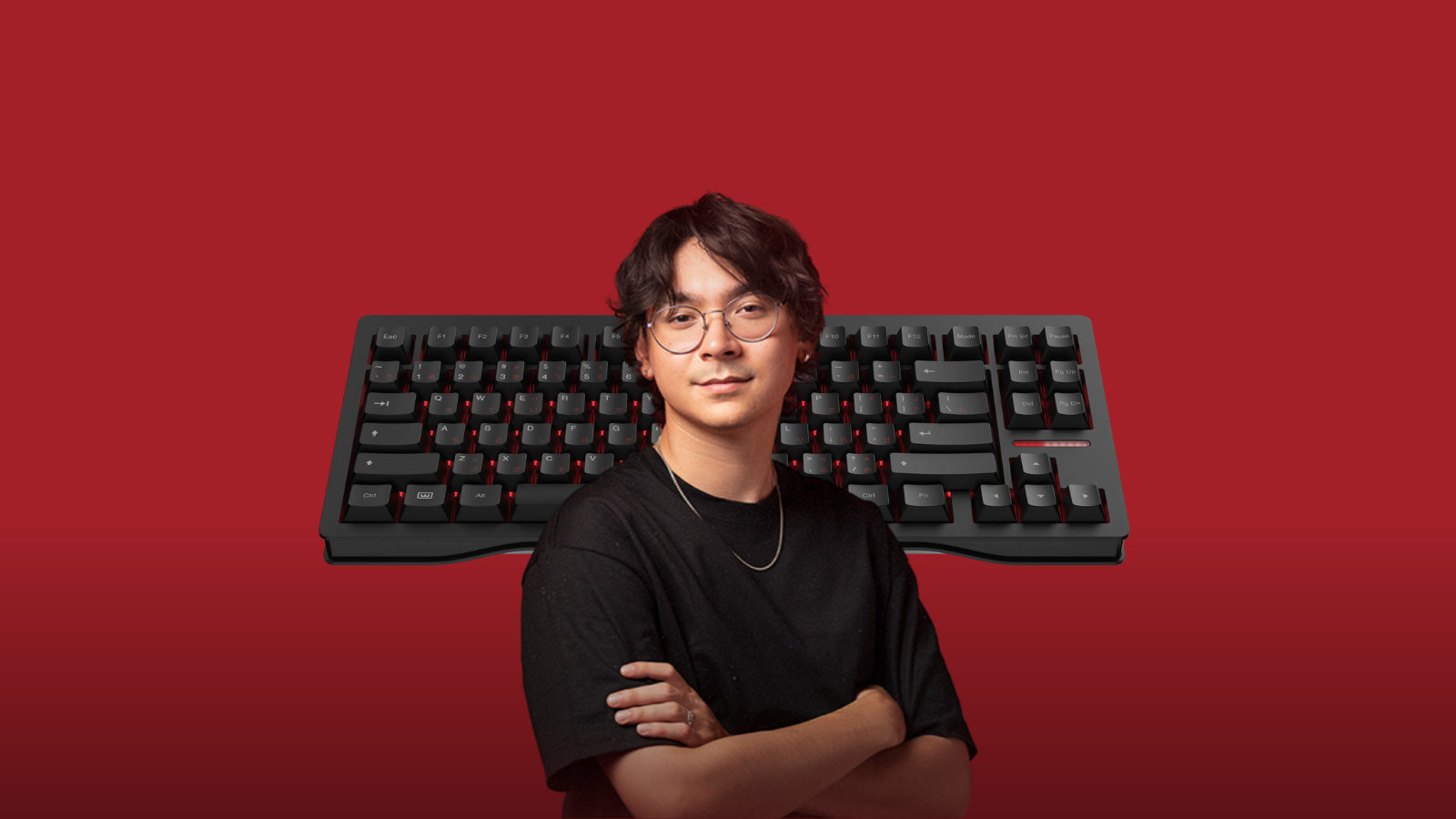
Tyson “TenZ” Ngo is known for many things. He’s known for his entertaining streams, his sick VALORANT gameplay, his team’s domination in the early years of the pro scene, and for changing gear all the time. At the height of TenZ’s pro career, I often found myself updating his settings or peripherals multiple times per day. Once he got a Wooting, though, he practically never switched keyboards. As such, it’s perhaps not a huge surprise that I’m now looking at a Wooting 80HE TenZ Takeover. I’ve put it to the test, and I’ll guide you through my experiences with the board.
This is not a full, in-depth review. This is more of a hands-on article to explain how the board feels and looks, and how it’s different from the regular 80HE. We also have a full review of the Wooting 80HE.
Why TenZ?
As I said in the intro, TenZ has been a Wooting user for a long time. Combine that with the fact that he’s an extremely popular player who is absolutely fascinated by gear, and you’ve got a collab that is extremely logical.
What I like about this collaboration is that TenZ really is a gear nerd. He likes to optimize his setup and has used tons of peripherals in the past while trying to find his endgame. Just looking at the amount of comments on his player page indicating a gear or settings change clearly shows this.
Knowing this, I expected this board to be more than just a recolor with a signature printed on. And that’s exactly what we got.
The Specs Difference
This is not just a fancy new colorway of the standard Wooting 80HE. It also has under-the-hood changes.
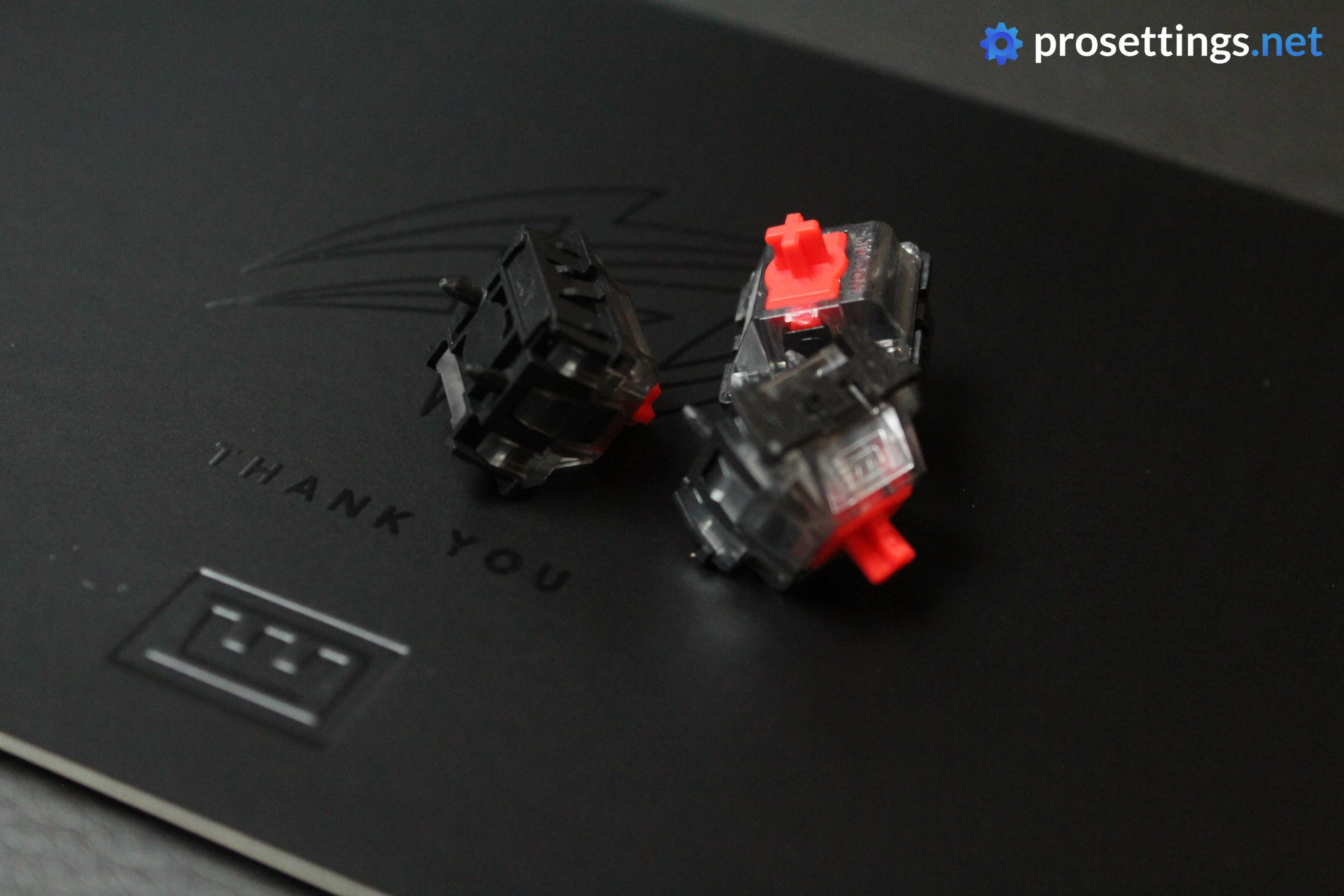
Compared to the normal version, the TenZ version has different switches (Lekker TikkenZ vs Lekker v2) and a different switch plate (FR4 vs PC). If you know your keyboards, you’ll know that these two factors massively influence the way a board feels and performs.
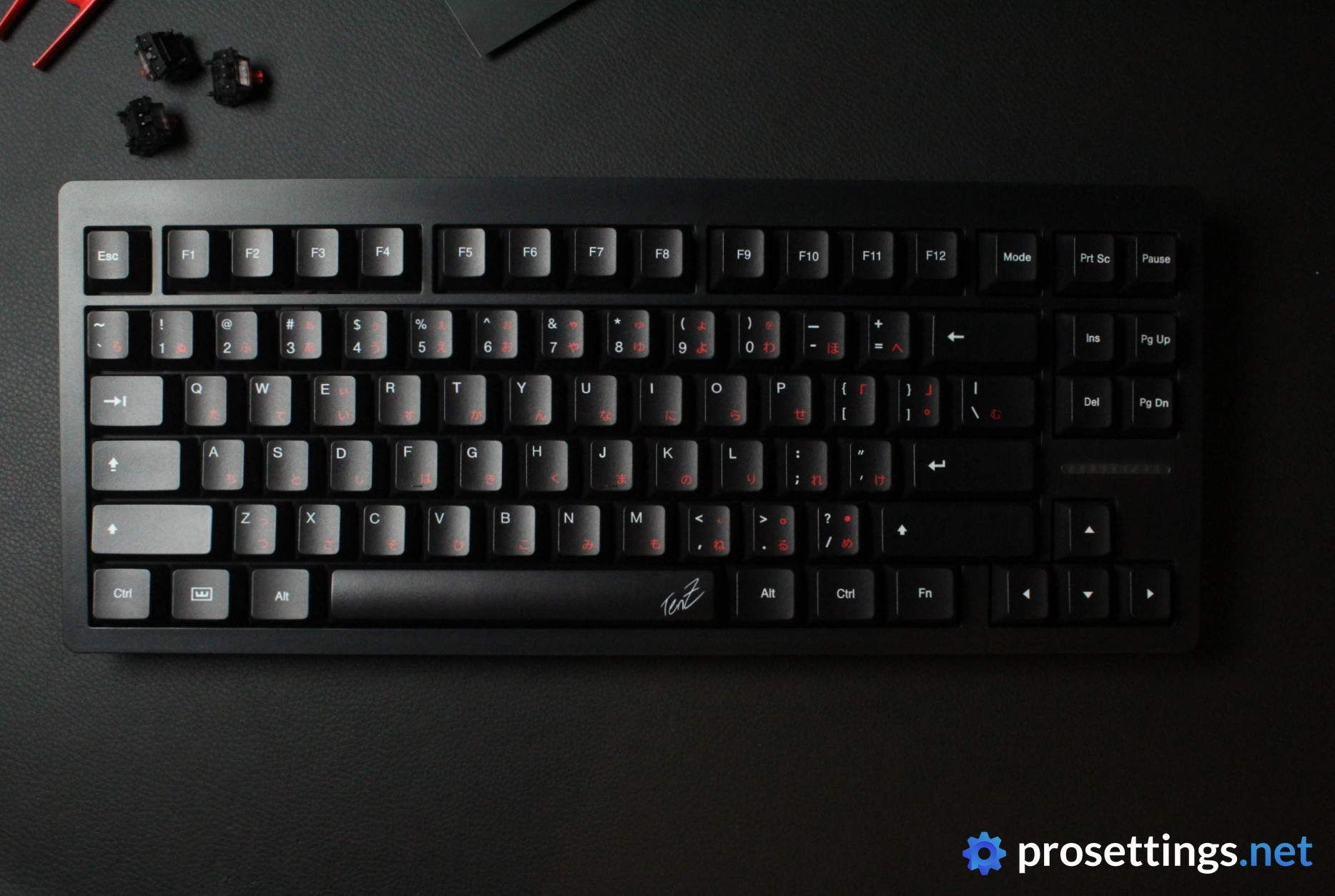
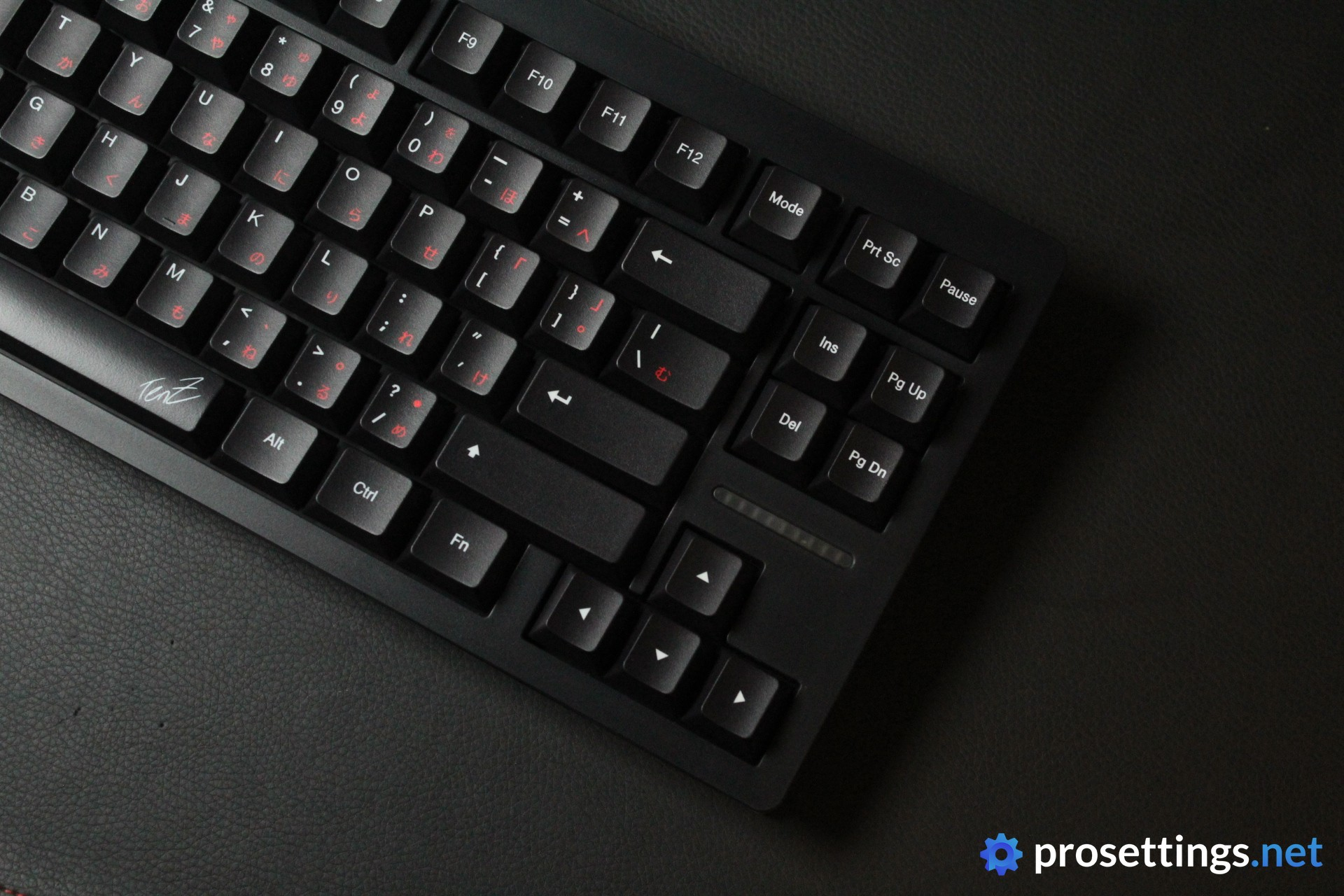
Additionally, it also comes in a special case (black with a translucent side part) and custom keycaps. It’s also pre-loaded with TenZ’s personal Wootility config, which is a nice finishing touch if you ask me.
So, to me, it’s clear that this wasn’t a ‘slap your name on it and call it a day’ kind of project, as Wooting even made special switches for this board.
Looks
I like the fact that TenZ hasn’t gone overboard with this design. He kept it minimal and, as far as I’m concerned, classy, though the board certainly has a bit of a ‘villain’ aesthetic rather than a cozy or neutral one.
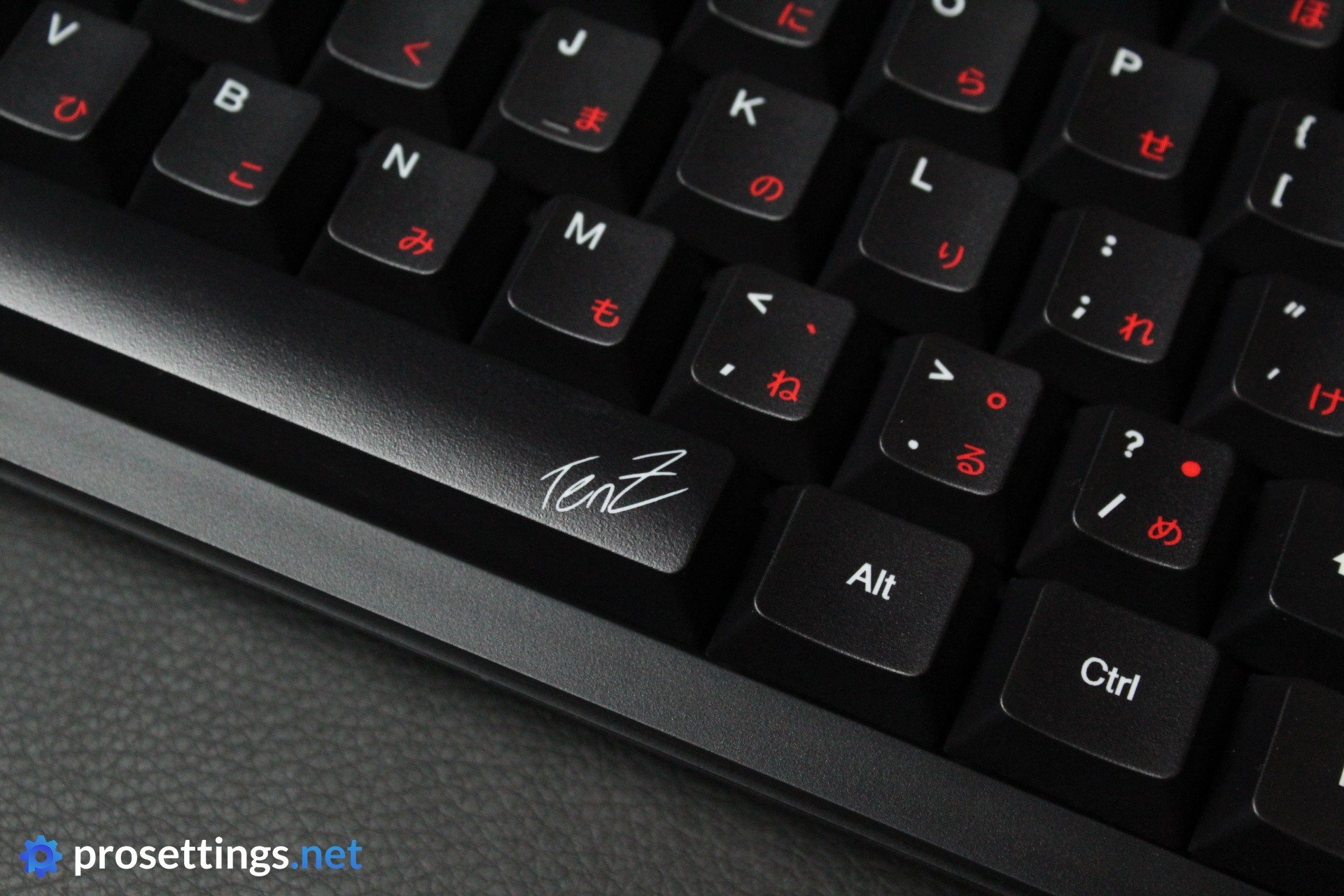
The red Hiragana sublegends on most of the keycaps (these have a medium texture to them, which I quite like) obviously give this board a certain edge but I quite like it. I had a set of white/black keycaps with Hiragana sublegends on one of my very first custom-built keyboards, so I’d be a hypocrite if I said I didn’t like this anyway.
What I also love is the lack of RGB focus. There is obviously RGB present, but the 80HE TenZ Takeover does not have shine-through legends. As someone who turns their RGB off (or sets it to just plain white), I will take a nicely designed solid keycap over a shine-through one any day.
Speaking of RGB: the switch plate here is black. This means that light gets absorbed rather than bounced away, so you’re not going to get much of that ‘ethereal’ look that you can get from white backplates. If a spectacular RGB show is your thing, this board is probably best skipped.
So, as a whole, I really like the aesthetic. The only thing that I could do without is the TenZ signature on the spacebar. I would’ve preferred that to be on the top of the case in a slightly smaller or more elongated font. Having it on the spacebar kind of breaks up the rather clean aesthetic that the board has going for it if you ask me.
Performance
In terms of pure gaming performance, you can obviously expect the best of the best. Wooting has long been known as a frontrunner when it comes to gaming keyboards, and they’re still very much at the front of the pack today. You can read my in-depth Wooting 80HE review if you’re interested in learning more.
In terms of the typing and gaming experience, the TenZ edition feels and sounds quite different from the regular one. The switches themselves feel a lot lighter and smoother, so it took me a bit of time to adjust to this board when using my regular Wootility settings. For me personally, they’re a bit too light. I prefer a bit more resistance when typing and gaming, as I have quite a heavy touch.
The Lekker TikkenZ switches do feel very nice, though. They’re extremely smooth, and stem wobble is reduced to a minimum. The FR4 plate that they’re on also gives the board a very consistent and precise typing feeling, which I like.
Finally, the sound has been drastically improved. In today’s market, the standard Wooting 80HE sounds good, but not amazing. The Wooting 80HE TenZ Takeover, however, is up there with some of the best. It’s quite ‘marbly’, which is a sound profile that I like. The stabilizers feel and sound great, and I did not notice any case ping or other unwanted noises.
So in short: is this board ‘better’ than the regular version? The answer is twofold. In terms of sound: yes, definitely. In terms of overall feel, it heavily depends on your preferences. If you like light switches and a pretty stiff typing experience, then this is without a doubt better. If you don’t, then you might be better off sticking to the regular version.
Sound Test (TenZ Takeover)
Sound Test (Regular Wooting 80HE)
Cost
When Wooting announced this collab, a lot of people worried that this would be a cash grab. Luckily, the TenZ Takeover is just $20 more expensive than the regular one. If you factor in the fact that you’re getting a set of more premium-looking keycaps, custom-designed switches, and a better overall sound, I would say that it’s worth it. If I try to configure a similar board on the Wooting website with a keycap set with Kana on it, I end up at a higher price than what the TenZ Takeover goes for. So, if you look at this as a slightly more premium version of the regular 80HE, it’s not expensively priced in my opinion. It’s actually quite fair.
Still, it’s by no means a cheap board. Premium analog keyboards do tend to cost quite a bit more than regular mechanical equivalents, so if you don’t really care about all the analog features that the board has to offer, you are better off spending your money elsewhere.
Conclusion
Rather than being just a recolor of the existing Wooting 80HE, the TenZ Takeover brings a number of actual, tangible changes to the board. It’s a slightly more premium version of the existing product, with some cool features (like TenZ’s profile being applied by default) that will make TenZ fans as well as regular keyboard fans happy.
To me, this is what a collab should be: a personalized twist on an existing product that does more than just respray the product in a different color. It achieves this without losing sight of what the original product was all about, too. As far as I’m concerned, it’s a hit, and I’m excited to see what future collabs have in store.
You can buy the Wooting 80HE TenZ Takeover on Wooting’s website.
Agen234
Agen234
Agen234
Berita Terkini
Artikel Terbaru
Berita Terbaru
Penerbangan
Berita Politik
Berita Politik
Software
Software Download
Download Aplikasi
Berita Terkini
News
Jasa PBN
Jasa Artikel
News
Breaking News
Berita