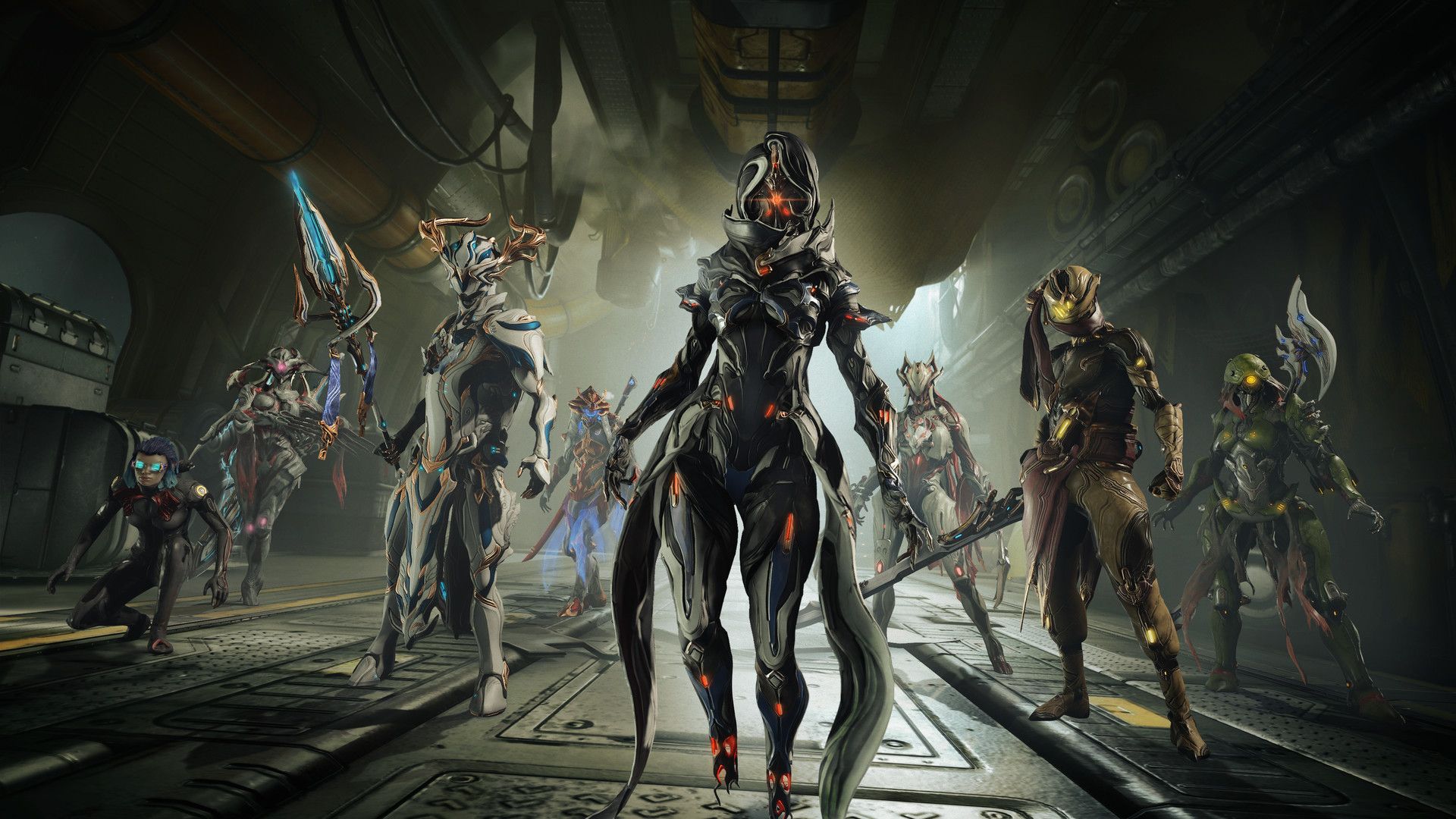
Warframe leadership isn’t about to celebrate the impending death of Destiny 2, even if they are on course to outlive one of their game’s strongest competitors in the sci-fi live-service space.
Developer Bungie announced in May that it’s ending active development on Destiny 2 after more than a decade as it turns its attention toward its new extraction shooter Marathon. Destiny 2 will remain playable for the foreseeable future, but its briefly resurgent Monument of Triumph update from June will be its last major content drop as static events and retouched modes sustain the game’s live operations.
Warframe, meanwhile, which released a year before Destiny (the original) in 2013, is showing no signs of slowing down with major story and content updates continuing at a regular cadence. Still, creative director Rebecca Ford refuses to dance on a grave, not just because she’s above something like that, but because she knows that if a game as enduring and influential as Destiny 2 can fall in favor of short-term business needs, anything can.


“It’s horrible news, because it shows that even if you care so much, the business side of this industry always gets the last remark,” Ford tells GamesRadar+ during a conversation at TennoCon 2026.
“Those are the types of stories and experiences that, when you’re in a position where you have your own game, your own IP, and you work as hard as you do on it… That’s not the first time it’s happened, and it’ll happen again, where the business aspect of the video game economy makes the decision for you, and it is existentially threatening at every level, because the idea that we aren’t in charge of our own goodbye is something I wake up thinking about every single day.”
Unless you’re a strictly independent, private studio which doesn’t answer to shareholders, this is the sort of thing every game developer worries about to some degree in 2026 as consolidation, mass layoffs, studio closures, and game cancelations define one of the most turbulent periods in games industry history. Everything happening at Xbox this week spells nothing but bad news for devs and the projects which now may or may not ever come to light.
Case in point: The Elder Scrolls 6 will be hurt and potentially delayed by Xbox layoffs, Bethesda devs expect: “This has had a crushing effect on morale”
PakarPBN
A Private Blog Network (PBN) is a collection of websites that are controlled by a single individual or organization and used primarily to build backlinks to a “money site” in order to influence its ranking in search engines such as Google. The core idea behind a PBN is based on the importance of backlinks in Google’s ranking algorithm. Since Google views backlinks as signals of authority and trust, some website owners attempt to artificially create these signals through a controlled network of sites.
In a typical PBN setup, the owner acquires expired or aged domains that already have existing authority, backlinks, and history. These domains are rebuilt with new content and hosted separately, often using different IP addresses, hosting providers, themes, and ownership details to make them appear unrelated. Within the content published on these sites, links are strategically placed that point to the main website the owner wants to rank higher. By doing this, the owner attempts to pass link equity (also known as “link juice”) from the PBN sites to the target website.
The purpose of a PBN is to give the impression that the target website is naturally earning links from multiple independent sources. If done effectively, this can temporarily improve keyword rankings, increase organic visibility, and drive more traffic from search results.