You can trust VideoGamer. Our team of gaming experts spend hours testing and reviewing the latest games, to ensure you’re reading the most comprehensive guide possible. Rest assured, all imagery and advice is unique and original. Check out how we test and review games here
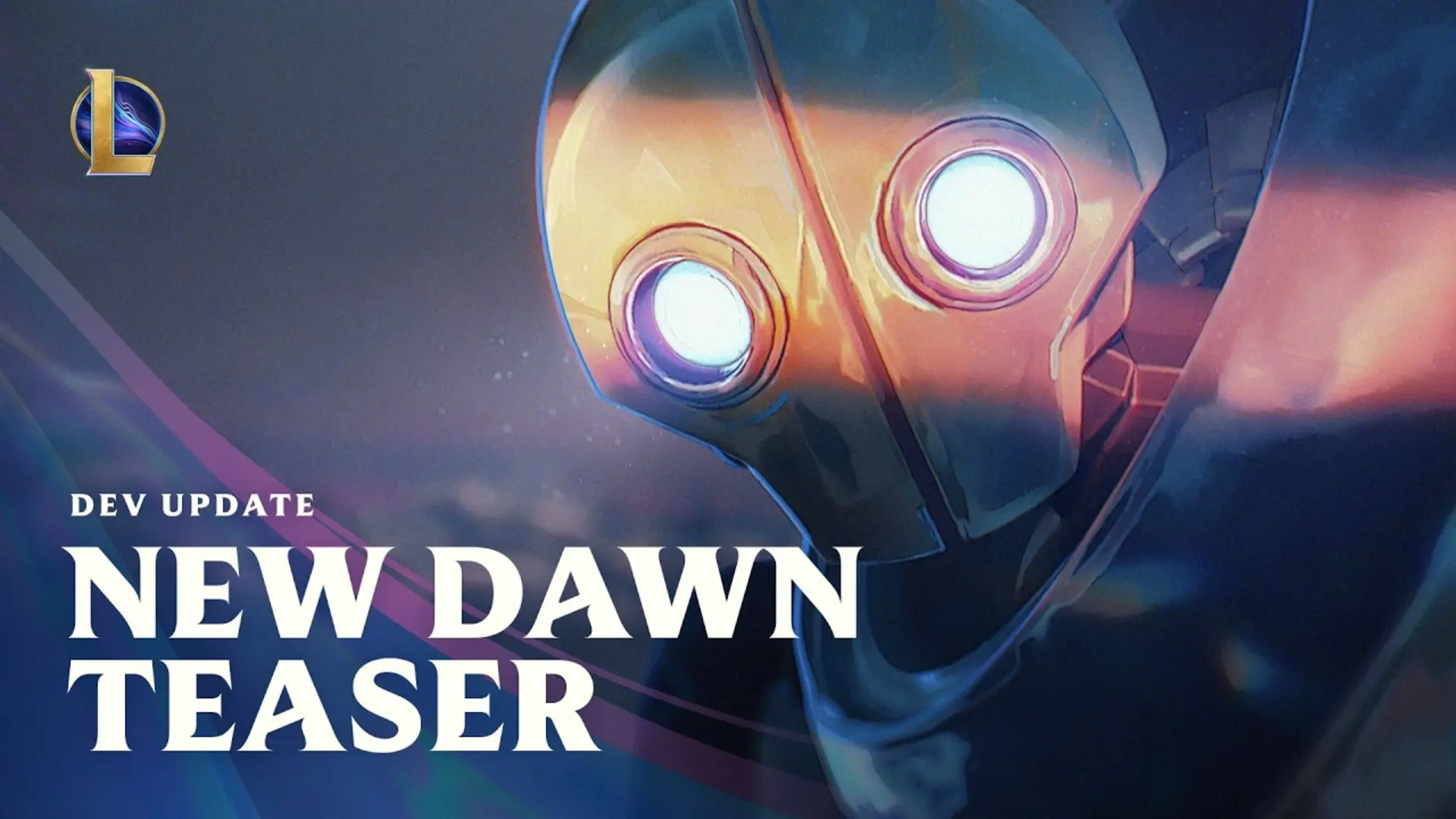
Riot Games has teased League of Legends: New Dawn, a wide-ranging overhaul of its free-to-play MOBA. It is due on PC later in 2027, and a full reveal is promised for January.
The teaser dropped this weekend during the 2026 World Championship, sharing the spotlight with Riot’s esports plans for next season. Riot frames New Dawn as the next step for League itself, and the official homepage now points players to a dedicated New Dawn hub that talks up the game entering “a new era”.
A fresh coat of paint for Summoner’s Rift
Riot is keeping most of the specifics under wraps for now, and the hub itself offers little beyond a developer video and an email sign-up. Even so, the teaser and the team’s comments, as reported by Bleeding Cool, outline the main pillars.
- A modernised game client
- Summoner’s Rift rebuilt with new visuals and new audio
- Gameplay that Riot says has evolved from the current game
- Fresh ways to play the existing roster, which already numbers more than 170 champions
The big unanswered question is what New Dawn means for existing accounts, skins and ranked progress. Neither the teaser nor the hub page addresses it, and Riot has not confirmed whether the changes will arrive in stages or all at once.
Worlds heads to Japan as First Stand goes all in
Alongside the game tease, Riot set out its 2027 competitive calendar in a LoL Esports roadmap post, and several familiar events are moving house.
- First Stand becomes First Stand: All In, a one-off expanded edition in China with more teams and players
- MSI 2027 goes to the Feria de Valencia, the event’s first trip to Spain
- Worlds 2027 opens with the Swiss Stage in Nagoya, the first time the championship has visited Japan
- The quarterfinals and semifinals follow at the Suwon Convention Center, with the Final at the new Seoul Arena
- First Stand returns to its usual format in Southeast Asia in 2028
First Stand was originally pencilled in for Southeast Asia next year, so the switch to China is the biggest shake-up. Riot said: “Taking place in China, First Stand: All In will be the largest tournament we’ve ever produced, creating more opportunities for teams from around the world to compete on the international stage.”
Taking place in China, First Stand: All In will be the largest tournament we’ve ever produced, creating more opportunities for teams from around the world to compete on the international stage.
LoL Esports, Riot Games
Another idea on the table is dropping the usual opening qualifier round at Worlds next year and using the Demacia Cup in its place. Hopeful teams would then face more multi-game series on the road to the main event, but Riot stresses that it has made no decision yet.
What happens next
January is the next big date for both the game and the esports calendar. Riot plans to give New Dawn its full reveal that month, and the esports team will return with the First Stand: All In format and qualification route, which will also reshape Split 1 in the regional leagues.
New Dawn is still only dated for later in 2027. Until then, Summoner’s Rift looks the way it always has, which, after this many years, is exactly what Riot seems keen to change.
PakarPBN
A Private Blog Network (PBN) is a collection of websites that are controlled by a single individual or organization and used primarily to build backlinks to a “money site” in order to influence its ranking in search engines such as Google. The core idea behind a PBN is based on the importance of backlinks in Google’s ranking algorithm. Since Google views backlinks as signals of authority and trust, some website owners attempt to artificially create these signals through a controlled network of sites.
In a typical PBN setup, the owner acquires expired or aged domains that already have existing authority, backlinks, and history. These domains are rebuilt with new content and hosted separately, often using different IP addresses, hosting providers, themes, and ownership details to make them appear unrelated. Within the content published on these sites, links are strategically placed that point to the main website the owner wants to rank higher. By doing this, the owner attempts to pass link equity (also known as “link juice”) from the PBN sites to the target website.
The purpose of a PBN is to give the impression that the target website is naturally earning links from multiple independent sources. If done effectively, this can temporarily improve keyword rankings, increase organic visibility, and drive more traffic from search results.